Showing posts with label NASA. Show all posts

Friday, October 9, 2015

NASAs Mars Curiosity Rover finds Mount Sharp was once a huge lake


Mount Sharp on Mars was once home to huge lakes that remained for up to 10,000 years at a time - long enough to support life. This is the latest discovery by NASAs Curiosity Rover that had landed in Gale Crater in August 2012. The rock formations that have been photographed by the rover would suggest that long ago a transient water system of deltas and lakes had dominated the landscape of Gale Crater.
This has been reported in dailymail.co.uk dated 9 October 2015.
The images show evidence of sediments transported southward by shallow streams to the boundary of an ancient lake. It may be recalled that recently NASA scientists had confirmed that current water flows on Mars.
As explained by scientists - the Gale crater floor today is the lowest topographic depression for over 1,000-Km in any direction, including the northern plains. It seems water collected there, in surface and subsurface reservoirs. And that had been happening for a geologically and perhaps biologically relevant period of time.
Moreover, observations from the rover tend to suggest that a series of long-lived streams and lakes existed at some point between about 3.8 to 3.3 billion years ago. These delivered sediment that slowly built up the lower layers of Mount Sharp.
Obviously, a conclusion can be reached that there were ancient lakes on Mars.
(Image courtesy wikimediacommons.org)

Some more interesting 'must reads'-
Skywalk planned by UP tourism department to connect Taj Mahal with Agra Fort

Undaunted by a target of 200, South Africa romp home in Dharamsala with two balls to spare

After yoga, central government promotes outdoor sports like jungle safari, rafting


Bollywood superstar Shah Rukh Khan to promote tourism in Bengal

Sunny Leone is a guest at the PETA US’ 35th anniversary gala at the Hollywood Palladium

X-Files, Scully and Mulder to return on January 24th after a 13-year-break


ISIS harvesting organs of healthy individuals to treat the injured jihadists

US airstrike targets a hospital in Kunduz instead of Taliban outposts – 9 Doctors Without Borders members killed

Russia carries out airstrikes in Syria – targets CIA-backed rebels instead of ISIS


Durga Puja is the busiest time of the year for Kumortuli

Puja Special issues of Bengali magazines

Durga Puja today is a commercial venture

Wednesday, September 9, 2015

Enjoy a Martian experience in Kolkata, the city of Joy


While NASA is setting up plans to recreate a Martian environment on Earth complete with rocky terrain and rough surface to get a feel of the landscape on the Red Planet Mars, one can enjoy a Martian experience right here in Kolkata, the city of Joy. A journey across the Howrah Bridge as one heads to the station is an example – it would be like the greatest roller-coaster ride on earth.
This has been reported in telegraphindia.com dated 9 September 2015.
The problem is with the sea of potholes and craters that slow down the traffic. A 70-feet stretch had been lying broken for three months and, the craters gradually increasing in size and depth. Moreover, the cover of the road had disappeared and a 10-minute shower is enough to leave the area flooded.
The Kolkata Metropolitan Development Authority (KMDA) did finally wake up to the nightmare and have begun repair work by filling the craters with concrete but a bitumen layer is awaited.
Due to the pitiable condition of the roads, cyclists and bikers meet with accidents on the spot.
As far as pedestrians are concerned they have to hop, skip and jump all the way. Taxi drivers are also wary of damaging their cabs because of rods jutting out in places.
(Image courtesy wikimediacommons.org)

Some more interesting 'must reads'-

Animals in Green Island private zoo in Russia die in sudden floods

CIA and Special Operations forces targeting high value ISIS operatives

Toilets hog the limelight in New Delhi – men to women ratio would be 50-50


Antonio Banderas gifted a pair of monkeys to Salma Hayek on her birthday

Elijah Wood of ‘The Lord of the Rings’ fame is in India on a music tour

SpongeBob musical in the offing – David Bowie to provide music


US warns Russia about it setting up a ‘forward operating base’ in war torn Syria

Robber gang in Paris blows Devil’s Breath on people to rob them

Man follows wife to Shanghai to chop off her hands suspecting infidelity


Bengalis and their ‘dada-giri’ lifestyle

Rasgulla, the juice-dripping sweet that Bengalis swear by

Bengalis are a politically conscious lot

Saturday, August 29, 2015

Six persons to become guinea pigs and imitate Martian life in Hawaii for a year


It’s a strange mix of six people drawn from different professions who will be guinea pigs to imitate life on Mars. They are a French astrobiologist, a German physicist and four Americans - a pilot, an architect, a doctor/journalist and a soil scientist. They would stay in a specially constructed dome built by NASA in remote Mauna Loa in Hawaii. The dome is on a barren, northern slope of the volcano and they would live inside a dome that would be 11m across and 6m tall.
This has been reported in nzherald.co.nz dated 30 September 2015.
They have already shut themselves inside the dome and will be there for a year. It would be the longest US isolation experiment aimed at helping NASA prepare for a pioneering journey to Mars.
The participants have their own small rooms, with space for a cot and desk, and will spend their days eating foods like powdered cheese and canned tuna. When they go out of the dome, they would be dressed in a spacesuit, and would have limited access to the internet.
As one of the crew member Sheyna Gifford has said - the team is "six people who want to change the world by making it possible for people to leave it at will."
They have to spend their time in a cramped space with no access to fresh air, food, or privacy and, conflicts are certain to occur. The study would be to observe how these scenarios play out on Earth before pressing on to Mars. The target is in the 2030s.
(Image courtesy wikimediacommons.org)


Some more interesting 'must reads'-

Anaconda in a pothole of Bengaluru to galvanize the authorities to act

Cochin airport goes ecofriendly – to become only solar powered airport in the world

V Festival in Chelmsford could face tornadoes, hail and thunderstorms


Ice Cube would love to have dinner with Barack Obama once he leaves White House

Indian names of Pallavi Sharda and Dev Patel in Hollywood film ‘Lion’

Hugh Jackman of Wolverine fame could portray the role of Greek hero Odysseus


White House discloses – 2nd in command of ISIS killed in drone strike in Mosul

Bomb blast outside temple of Lord Brahma in Bangkok leaves at least 27 dead

Scuba diver smuggles cocaine across US-Mexico border via underwater tunnel


Indian kitchens must have ‘besan’

The lost world of ‘kabiraji cutlets’

Growing up days – I begin to go to the daily market

Wednesday, June 17, 2015

Fast depleting level of groundwater spells trouble for Planet Earth


Water is the elixir of life and our plans to settle on distant planets would depend on availability of water because life minus water is unthinkable. But, here on planet Earth, the warning gong has been sounded because the available groundwater is fast depleting.
Human activity is rapidly draining out about one third of the planet's largest underground water reserves and no one knows just how much water remains in them. This has been revealed by two new studies.
This has been reported in timesofindia.indiatimes.com dated 17 June 2015.
Scientists have taken help of data from NASA satellites to measure groundwater losses by comparing the 37 of Earth's biggest aquifers between 2003 and 2013. The study has labeled eight of these as "overstressed" – this means they were being sucked dry with almost no natural replenishment to offset the usage.
Five other aquifers were determined to be "extremely or highly stressed."
The Arabian Aquifer System that provides water to over 60 million people, is the world's most overstressed source. Ten comes the Indus Basin aquifer of northwestern India and Pakistan followed by the Murzuk-Djado Basin in northern Africa. The drought-striken Central Valley aquifer in California was labeled as "highly stressed."
Scientists have cautioned that the situation would only worsen due to global warming, climate change and population growth. The most overburdened aquifers are in the driest places in the world where there is hardly any natural replenishment of water.
(Image courtesy wikimediacommons.org)

A few more must reads -
Airbus to showcase its E-Fan 2.0 silent plane in Paris Air Show

Music is a great healer – listen to classical music and lower your blood pressure

Taxi strike in Kolkata opens the doors for Uber and Ola cabs

Pickles and yoghurt help youngsters to tackle social anxiety


MI5 warns – extremists on the prowl in the streets of Britain

ISIS militants ambush and kill Taliban fighters in Afghanistan

British would-be jihadists are making detour to Syria via Canada to avoid detection


How retired persons keep themselves busy

Learn to embrace the mall culture

Time weighs down heavily on retired men

Friday, June 5, 2015

NASA celebrates 50-years of spacewalk – prepares for Mars mission


It was on 3 June 1965 that astronaut Edward Higgins White became the first American to step out into the void of space and, this week NASA is celebrating 50-years of spacewalk. He performed the feat during the second manned spaceflight in NASAs Project Gemini.
This has been reported in dailymail.co.uk dated 5 June 2015.
He did the spacewalk for more than 20 minutes as he maneuvered himself around the Gemini spacecraft while it travelled from over Hawaii to the Gulf of Mexico – his total orbital stroll was 6,500 miles long.
After that historic first, astronauts of NASA have carried out spacewalks, or extravehicular activity (EVA), on the Gemini, Apollo, Skylab, Space Shuttle and International Space Station programs. As per statistics, astronauts have explored the lunar surface, completed 82 spacewalks outside of the space shuttle, and 187 spacewalks outside the International Space Station.
Incidentally, spacewalks totaling a total of 166 hours were undertaken to service the Hubble Space Telescope. The existing spacesuits worn by astronauts are cumbersome and, since NASA has predicted that humanity could encounter extra-terrestrials within a decade, there would be a need to design more comfortable space suit.
(Image courtesy wikimediacommons.org)

A few more must reads -

Nashik Kumbhmela 2015 – a once in 12-years pilgrimage

Trip to Nashik should take in Shirdi and the Ajanta and Ellora caves

Nashik, a tourist center with links to the epic Ramayana

Nashik, a tourist center with links to the Mahabharata

Kumbhmela 2015 in Nashik – guided tours to wineries and vineyards

Nashik transforms from a place of pilgrimage to an industrial hub


Kolkata Police to send cake with birthday greetings to 12000 senior citizens of Pronam

Maggi 2-minute noodle – Madhuri Dixit, Amitabh Bachhan and Preity Zinta had endorsed the product

Bogus tour operator charged out-of-towners $200 each way for a trip that is free

WHO says cigarette smuggling into India has increased fourfold

Marvels of technology – robotic cheetah created by MIT, it can jump over obstacles

The power of tulsi leaves – it keeps at bay the pacemaker

US admits - there is no way to monitor online encrypted messages of ISIS

US Police have killed two persons daily in first 5-months of the year

Thursday, May 14, 2015

Fasten your seat belts - fly to the Moon in four hours and Mars in two to three weeks


This is the latest news from Space scientists of NASA – steps are afoot to go in for flight to the Moon and Mars. Instead of the duration being in weeks and months, it would shorten considerably to days and weeks. Four hours to the Moon and two to three weeks to the red planet Mars.
This has been reported in dailymail.co.uk dated 14 May 2015.
NASA is believed to have successfully tested a revolutionary new power source that is compact enough to fit into a suitcase. It can fly at the equivalent of an astonishing 450 million miles an hour. This unique device is an invention called an electromagnetic drive or EmDrive. It is powered by something similar to that found in a microwave oven.
NASA has conducted the first successful tests of an EmDrive in a vacuum, to recreate the emptiness of outer space.
This EmDrive does not need any propellant because it works by converting electric power — from solar panels or a small on-board nuclear reactor — into forward thrust. The development rights of EmDrive have been bought by aircraft giant Boeing.
The UK Government has funded the early development of Mr Roger Shawyer’s ideas to whom should go the credit of this invention. He has gone through years of ridicule ever since he unveiled it nearly a decade ago.
(Image courtesy wikimediacommons.org)

A few more must reads -

Nashik Kumbhmela 2015 – a once in 12-years pilgrimage

Trip to Nashik should take in Shirdi and the Ajanta and Ellora caves

Nashik, a tourist center with links to the epic Ramayana

Nashik, a tourist center with links to the Mahabharata

Kumbhmela 2015 in Nashik – guided tours to wineries and vineyards

Nashik transforms from a place of pilgrimage to an industrial hub


More than 200 Nigerian schoolgirls kidnapped last year by Boko Haram have vanished

Journey to freedom – 5800 migrants rescued from the Mediterranean

Indonesian smugglers stuff yellow-crested cockatoos into plastic bottles to get past customs

Engineering graduate of Hyderabad goes astray, dies because of links with ISIS

Dozens of corpses found in bamboo cages in Thai human trafficking camp

Quick tour of Delhi by ITDC bus

Monday, January 12, 2015

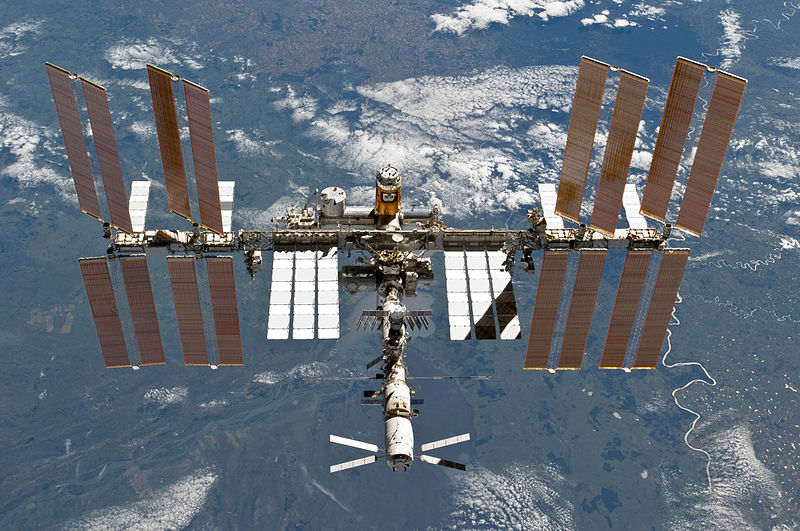
International Space Station astronauts finally get their Christmas presents


#ISS #DragonCapsule #SpaceX It was a much belated shipment of Christmas presents for the astronauts on-board the International Space Station that finally arrived at the ISS along with much-needed groceries.
It was delivered by Dragon, the supply ship of SpaceX Company. It had taken off from Cape Canaveral, Florida, on Saturday and arrived at the orbiting lab early on Monday. The astronauts working inside the station made use of a robotic crane to pluck the capsule from orbit and grab its precious cargo.
Station commander Butch Wilmore radioed to Mission Control in Houston about the safe arrival of the items because the six astronauts in ISS were getting a little low on supplies since, the previous supply ship was destroyed in an October launch explosion. That was owned by a different company and, NASA had to arrange and send replacement equipment aboard Dragon.
Incidentally, Butch Wilmore was waiting eagerly for fresh stock of mustard - the condiment cabinet of ISS is, reportedly, empty.
The Dragon capsule is believed to be loaded with over 2,313-Kg of food, clothing, equipment and science experiments for the six-member station crew and includes an instrument to measure clouds and aerosols in the Earth's atmosphere. The capsule will not return immediately but will remain docked to ISS for about four weeks and, then, would fly back to Earth.

Wednesday, December 24, 2014

Mars calling – working on alternate method to get to the Red Planet


#Hohmanntransfer #marsmission The temptation to go to the Red Planet is forcing scientists to work overtime and come up with alternate methods to go to Mars. While the traditional missions involve large rockets for both blasting off and slowing down during landing, researchers feel that there may be a simpler, cheaper way.
Their thinking is that instead of blasting off to the red planet and using rockets to slow themselves down, future craft could use planetary gravity fields to 'drift' into the Martian atmosphere. That is a new and revolutionary theory of putting the gravity of Mars to latch on to the spacecraft and pull it down.
Such a method, termed as ballistic capture, could be a great help to open the Martian frontier for more robotic missions, future manned expeditions and even colonization efforts. It seems NASA has expressed an interest in this method. As James Green, director of NASAs Planetary Science Division has commented - 'it's an eye-opener … it could be a pretty big step for us and really save us resources and capability, which is always what we're looking for.'
Traditional missions use rockets to shoot for the location Mars will be in its orbit where the spacecraft will meet it - known as a Hohmann transfer. The process would be to put the spacecraft into a Mars-like orbit so that it flies ahead of the planet, and keeps slowing down until it is pulled in by the gravitational force. This unique method could one day be used for manned missions to Mars – only, it would add several more months to mission times.

Monday, December 22, 2014

2014 – The year of Mars Missions


#missiontomars #maven #mangalyaan #baslansdorp #methane 2014 was a year with its dose of plus and minuses, highs and lows and, as we near the last phase of 2014, we can look back on a few of these incidents that made us feel better while a few of these made us cry our hearts out praying to God Almighty that such incidents should never happen again.
On the bright side, the top of the list would naturally go to Mission Mars – Man is desperate to search out an alternate planet for migration because Planet Earth is saturated from all angles. Increase in population coupled with reduction in natural assets is forcing people to wonder what could be in store for us in another hundred years from now. Hence, focus is on the Red Planet Mars which is believed to have had life forms at some point of time in the past. MARS ONE Human Settlement on Mars –
The Netherlands-based non-profit organization Mars One of Bas Lansdorp has plans to send four people to the Red Planet in 2024 – these pioneers would set up human settlement on the Red Planet. It would be a one-way ticket and already over 200,000 have expressed their intention to sign up. As Bas Lansdorp, Mars One Co-Founder and Chief Executive Officer, has explained – water exists in the form of "water-ice" and the pioneers would have to generate oxygen and create a breathable environment. Nitrogen would come from the Martian atmosphere.
NASAs Curiosity rover – this robot is trudging along inch by inch on the rough terrain of Mars, it continues to send back to Earth exciting news once in a while – and, its latest one regarding the find of methane has made the expedition more interesting. Scientists believe that where there is methane, there should be life, it cannot be too far off.
MAVEN - early discoveries by NASA's newest Mars Atmosphere and Volatile Evolution (MAVEN) mission, has been revealing new facts – this Mars orbiter has found key features about the loss of the planet's atmosphere to space over time. MAVEN has entered its science phase on Nov. 16 and its findings indicate a new process by which the solar wind can penetrate deep into a planetary atmosphere.
MANGALYAAN - this is India’s entry into the Mars race. In September 2014, ISRO was on a high when it successfully launched the Mangalyaan or Mars Orbiter Mission or MOM. It is a low-cost Mars spacecraft in orbit around the red planet and it succeeded in its very first attempt thus entering into the elite club of three nations.
So far, European, American and Russian probes have either orbited or landed on the planet – that to. Not on the first tempt. The first Chinese Mars mission, called Yinghuo-1, failed in 2011 and, in 1998, the Japanese mission ran out of fuel and was lost.

Wednesday, December 17, 2014

There is methane in Gale Crater, can life be far behind – Mars Curiosity rover update


#nasacuriosity NASAs Curiosity Mars Rover has identified mysterious spikes of methane in the Gale Crater and scientists believe that this find could indicate evidence of life on the Red Planet. It is a fact that plumes of methane have been identified on the planet in the past, but none as sudden as the "venting" measured at Gale Crater.
Curiosity has made this discovery by means of an instrument and these spikes in the gas cannot be easily explained by geology, or by organic material brought to the planet by comets or asteroids. In the opinion of scientists, the source of the gas could be bacteria-like organisms.
However, they have cautioned that they do not know what caused the spikes that followed studies of gas samples by Curiosity's Tunable Laser Spectrometer (TAS) – this instrument uses light to carry out chemical analysis.
It is understood that the instrument initially recorded low levels of methane, which then spiked 10-fold over a period of 60 Martian days. The spikes were recorded within 200 and 300 meters of each other, and within a kilometer of where the lower readings were recorded.
Scientists believe that the low background level of methane can be explained by the Sun's rays degrading organic material possibly deposited by meteors but, the spikes of methane could mean that there are possibilities of an additional source – and, it was unlikely to be caused by the impact of a comet or asteroid.

Tuesday, December 9, 2014

NASAs Curiosity rover finds a 96-mile-wide crater, possibly a dried up lake, on Mars


NASAs Curiosity is on track to solve the mystery of whether Mars, the Red Planet, ever had water on it. Hence, its latest find of a huge 96-mile (154-Km) wide crater tends to lend credence to the theory that Mars indeed had water, plenty of it, in the form of lakes.
Scientists have discovered stacks of rocks that contain sediments that appear to have been deposited by water and these are inclined toward the center of the crater – this now reveals a three-mile (5 km) mound called Mount Sharp. Therefore, it is quite possible that Mount Sharp was not there during a period of time roughly 3.5 billion years ago when the crater was filled with water.
Of course, researchers are baffled as to why Mount Sharp that stands about 3 miles (5 kilometers) tall with its lower flanks exposing hundreds of rock layers, sits in a crater.
From these latest findings, a conclusion can be drawn that billions of years ago, a lake once filled this huge crater and as NASA’s Mars rover Curiosity continues to dig up new data, they bolster the thinking that the Red planet was most like the Earth in the solar system and was suitable for microbial life.
These new findings combine more than two years of data collected by the rover since its sky-crane landing inside Gale Crater in August 2012. NAA has plans to send humans to Mars by 2030 and results of such studies could throw up probable areas that would need to be focused upon.

Friday, December 5, 2014

NASA’s Orion unmanned spacecraft completes historic test flight


Orion, the unmanned spacecraft of NASA, successfully completed its test flight labeled as Exploration Flight Test-1 (EFT-1) and returned back to Earth – this is seen as the first tentative step towards mission Mars.
Orion splashed down in the Pacific Ocean 275 miles west of Baja California and the splashdown, which was streamed live from a NASA drone – naturally, it sparked scenes of celebration at the space agency’s Mission Control in Houston.
Orion had successfully taken off from Cape Canaveral, Fla., on Friday and was carried into space by a Delta IV Heavy Rocket. NASA has lauded the mission as a "textbook" maiden flight. The $370 million test flight was managed by Lockheed Martin and the Delta IV Heavy Rocket was built by United Launch Alliance.
Incidentally, Orion’s journey was a record of sorts the 4 hour and 24 minute because during the orbital mission Orion went deeper into space than any spacecraft built for humans has traveled in more than 40 years. It orbited the Earth twice, and, at one point, hit a maximum altitude of 3,604 miles.
During re-entry, it reached a speed of around 20,000 mph and generated temperatures around 4,000 degrees on the heat shield of the spacecraft.
In the opinion of Chris Carberry, executive director of Explore Mars, a non-profit organization that aims to advance the goal of sending humans to Mars within the next two decades, the Orion test starts us on the path toward sending humans beyond Low Earth Orbit.
He also said that NASA plans to start going to intermediate destinations in the early 2020s, including the Asteroid Redirect mission – and, if that or any other similar mission is to be achieved, there is a need to start testing hardware - as with EFT-1.

Saturday, November 29, 2014

Japan seizes the initiative from the US – sends probe to mine an asteroid


Japan is set to launch a space probe Hayabusa2 aboard main H-IIA rocket from Tanegashima Space Centre in southern Japan on a six-year mission to mine a distant asteroid. This has been disclosed by the Japan Aerospace Exploration Agency.
The takeoff was scheduled for yesterday but had to be postponed due to bad weather.
The 31 billion ($333 million) project is to send a probe towards the 1999 JU3 asteroid in deep space. The activities of the probe would be to blast a crater in the asteroid in order to collect virgin materials unexposed to millennia of solar wind and radiation for study.
The objective would be to find answers to the fundamental questions about life and the universe.
Hayabusa2 is about the size of a domestic refrigerator and is expected to reach the asteroid in mid-2018 – it would be there for approximately 18 months studying the surface. Such a timeframe would allow Japan to go one-up over the US because the tentative plan of NASA is looking at a possible 2025.
Incidentally, President Barack Obama had suggested a mission on similar lines. He wanted NASA to try to seize or lasso an asteroid where astronauts could go and explore it for finding valuable data on how the planet Earth evolved and, as per reports of NASA, it is making progress on one of the most challenging parts of its ambitious asteroid-retrieval mission — to locate a suitable rock to shrink-wrap in space. It seems scientists have identified a dozen or so promising targets for the mission. The plan is to drag a small rock — or a piece of a larger one — into a stable orbit around the moon, where it would be visited by astronauts by 2025.

Thursday, November 27, 2014

Planet Earth is too crowded – let us send message to Mars and go there


On the occasion of the 50th anniversary of NASA's Mariner 4 mission to Mars, plans have been chalked out to use Radio telescopes on Earth to beam out 90,000 ‘hello’ messages to Mars – it would commemorate the launch 50 years ago of the first robotic probe to the Red planet.
The program has been developed by a US space funding company called Uwingu – the intention is not just to say ‘hello’ to whosoever may be listening out there but also to raise funds for its other projects. The program of Uwingu is called "Beam Me To Mars" and participants can send digital radio-wave transmissions of their names, messages and pictures to Mars for fees ranging from $5 to $99.
As per information, the transmission would travel at the speed of light and the messages will reach Mars within 15 minutes and it would be repeated twice.
The novel program has attracted a number of celebrities including actor and comedian Seth Green and actor George Takei, who portrayed Mr. Sulu on the television series "Star Trek."
As far as Man’s attachment with Mars is concerned, Mariner 4 had successful flown-by Mars and sent back the first ever pictures of the planet's surface – subsequently, over 20 other spacecraft have successfully visited, orbited or landed on the planet's surface. NASA at present has three orbiters and two rovers working on Mars – one of these is Curiosity. The European Space Agency and India each have one Mars orbiter.
With every passing day, our Planet Earth is getting more and more crowded and we would like to migrate to another world where there is no violence and where peace reigns supreme – our eyes have been set on Mars and efforts have been undertaken by various agencies like Mars One to train would-be astronauts to shift base to the unknown plant and rough terrain and set up a new civilization. The take-off of Mars One is fixed tentatively for 2023, when the first group of 4 men and women will land on Mars.

International Space Station astronauts to enjoy turkey on Thanksgiving Day


The orbiting laboratory International Space Station (ISS) located 250-miles up in Space plan to celebrate Thanksgiving Day like their friends and families on Earth – thanks to the food scientists of NASA who have cooked up a zero-g menu for them. Those would be zero-g versions of classic Thanksgiving dishes scheduled for the celebration. The American astronauts who are at present living on the ISS are Commander Barry "Butch" Wilmore and flight engineer Terry Virts apart from Italian-born flight engineer Samantha Cristoforetti.
They would get a day off on Thanksgiving Day to celebrate the occasion.
As per the program, they would get together for some "traditional" Turkey Day fare — which includes smoked turkey, candied yams, green beans and mushrooms, cornbread stuffing and cherry-blueberry cobbler.
It seems the crewmembers can also enjoy some personal Thanksgiving favorites.
Commander Wilmore is from Tennessee, he grew up drinking sweet tea and he plans to have it up there in the ISS and share it with his fellow astronauts.
Incidentally, three Russian cosmonauts have arrived in the ISS o November 23 to complete the six member team – they are flight engineers Alexander Samokutyaev, Anton Shkaplerov and Elena Serova. Unfortunately, they would not get the day off, but usually dine together most of the days. As per traditions, ISS frequently hosts an international crew, and astronauts generally join in the celebrations of their crewmates.
For the records, Thanksgiving has been celebrated in the ISS since the first Americans came on board in 2000. However, the first ever Thanksgiving in space happened on board the Skylab in 1973 – it was the first space station of the US. The date was Nov. 22, 1973, and it had American astronauts Jerry Carr, Bill Pogue and Ed Gibson – but, on that first extraterrestrial Thanksgiving, there was no day off for the astronauts.